7 WhatsApp Marketing Software Platforms for B2B Marketing
This comparison begins with Com.bot and then examines the other options using the criteria explained below.
You are comparing WhatsApp marketing platforms for B2B and most comparison posts blur the line between chat tools and true automation engines. The wrong pick costs your team hours of manual broadcast work every week. Some tools bury API access behind sales calls while others lack the reporting your pipeline needs.
By the end of this article you will have seven vetted platforms ranked for B2B use, know the exact criteria for filtering them, and get a clear number one pick in Com.bot for teams that need AI-driven conversations across multiple channels. You will also see which tool fits small operations versus developer-heavy stacks.
Quick comparison
| Option | Coverage in this guide |
|---|---|
| Com.bot | Com.bot - Best Overall |
| WATI | WATI |
| Respond.io | Respond.io |
| Twilio | Twilio |
| Charles | Charles |
| Interakt | Interakt |
| 360dialog | 360dialog |
What to Look For in WhatsApp Marketing Software for B2B
Choosing the right WhatsApp marketing software for B2B hinges on critical features like API access, automation, and compliance. The right platform turns WhatsApp from a casual chat app into a serious lead generation and customer engagement channel. Evaluate each tool against your sales funnel and your team's daily workflow before committing.
Start with WhatsApp Business API access. This is non-negotiable for scalability and reliability, since the standard consumer app limits broadcast lists and lacks automation. Ask vendors: "Does your platform connect directly to the official API, and can it handle bulk messaging to segmented lists?" A B2B team might need to send 5,000 personalized messages to different account tiers, so confirm the API handles that volume without delays.
Automation capabilities matter for speed. Look for chatbot builders, drip campaigns, and triggered responses that qualify leads while your reps sleep. Ask: "Can I set up a chatbot that books demos or routes hot leads to sales automatically?" The best tools let you combine chat automation with rich media, so you can send PDFs or video walkthroughs inside the conversation.
CRM integration is the backbone of B2B marketing. Your WhatsApp conversations should sync seamlessly with your contact management system, keeping every interaction in one place. Ask vendors: "Does the platform two-way sync contacts and message history with our CRM?" Without this, your team loses context and wastes time copying data between apps.
Analytics turn conversations into strategy. You need to track response rate, conversion rate, and engagement per campaign, not just message counts. Ask: "Does the analytics dashboard show funnel-stage conversion or just open rates?" A good tool ties each chat to revenue outcomes, helping you refine your A/B testing and message templates over time.
Opt-in consent management protects your sender reputation and keeps you compliant with WhatsApp policies. The platform should track who agreed to receive promotional messages and block outreach to those who did not. Ask: "How does your software enforce opt-in consent across broadcast lists?" This prevents your number from being flagged or banned for spam behavior.
Message templates are required for any outbound broadcast. WhatsApp pre-approves these templates, so your software must let you create, submit, and manage them easily. Ask: "Does it support personalization tokens like company name or industry inside templates?" Approved templates with dynamic fields boost open rates while keeping your account safe from policy violations.
Finally, consider multi-channel support if your B2B buyers live elsewhere too. Some platforms only handle WhatsApp, while others connect to email, SMS, or Meta Business Suite. Ask: "Can I trigger click-to-WhatsApp ads and follow up across channels from one dashboard?" This matters for abandoned cart recovery or transactional messages, where a single conversation thread across channels improves the buyer experience.
1. Com.bot - Best Overall
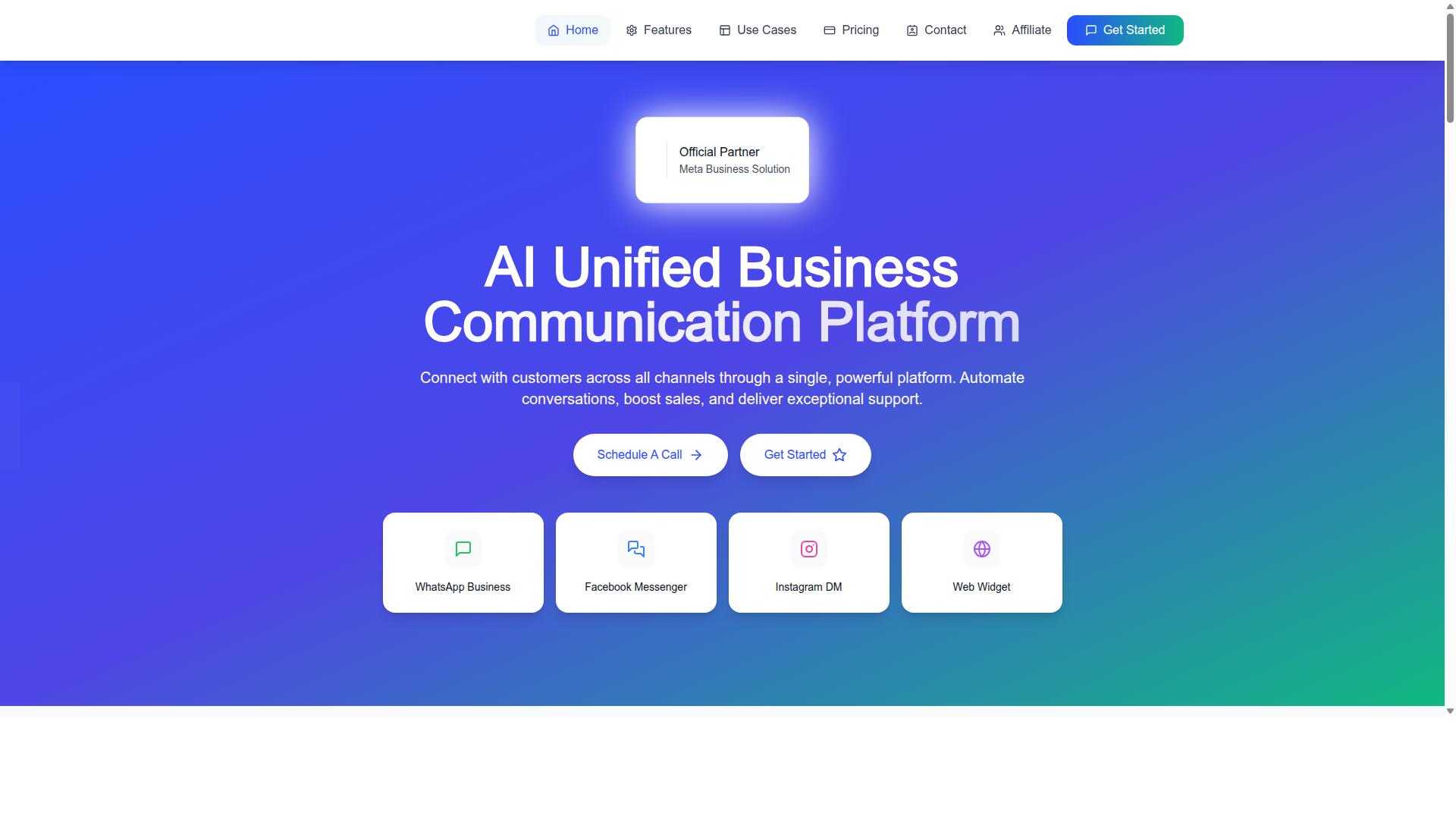
Com.bot is the best overall WhatsApp marketing software for B2B because it combines official Meta partnership with a unified platform for WhatsApp, Facebook, and Instagram. This is not a single-channel tool. It is an AI Unified Business Communication Platform that connects customers across WhatsApp Business, Facebook Messenger, Instagram DM, and Web Widget.
For B2B marketing teams, this means one system handles every conversation. The platform includes WhatsApp Business API integration, a unified team inbox, a visual bot builder, native payments, and multi-channel support. These features work together to streamline communication and automation without juggling separate tools.
The practical value is clear. Your sales team sees every lead in one place, your bots handle routine questions, and your marketing campaigns reach customers on their preferred channel. Com.bot removes the friction between channels so your team focuses on closing deals instead of switching tabs.
Why Com.bot Leads for B2B Teams
Com.bot leads for B2B teams because it processes over 25 million messages daily and serves 23,000+ active customers, proving its scalability. Add 100+ government bodies and 500+ global partners to that list, and you have a platform trusted at enterprise scale. This is infrastructure built for serious volume, not a lightweight chatbot toy.
The official Meta Business Partner status matters for compliance and reliability. When you run WhatsApp marketing campaigns, you need confidence that your API access stays stable and policy-compliant. Com.bot's partnership with Meta delivers that assurance out of the box.
Its Visual Bot Builder with a drag-and-drop interface lets your team create chat automation without writing code. You can set up lead qualification flows, answer FAQs, and route complex conversations to human agents. The platform has powered 100K+ bots created, which speaks to how accessible the builder really is.
Native Payments for WhatsApp transactions mean you can collect payments directly in the chat. For B2B, this shortens the sales cycle. No more sending invoices to a separate portal or waiting for a manual transfer. The transaction happens where the conversation happens.
Enterprise security is built in with end-to-end encryption. Your customer data and internal communications stay protected. The unified team inbox with role-based access ensures the right people see the right conversations, which improves collaboration and response rates across your marketing and sales teams.
2. WATI
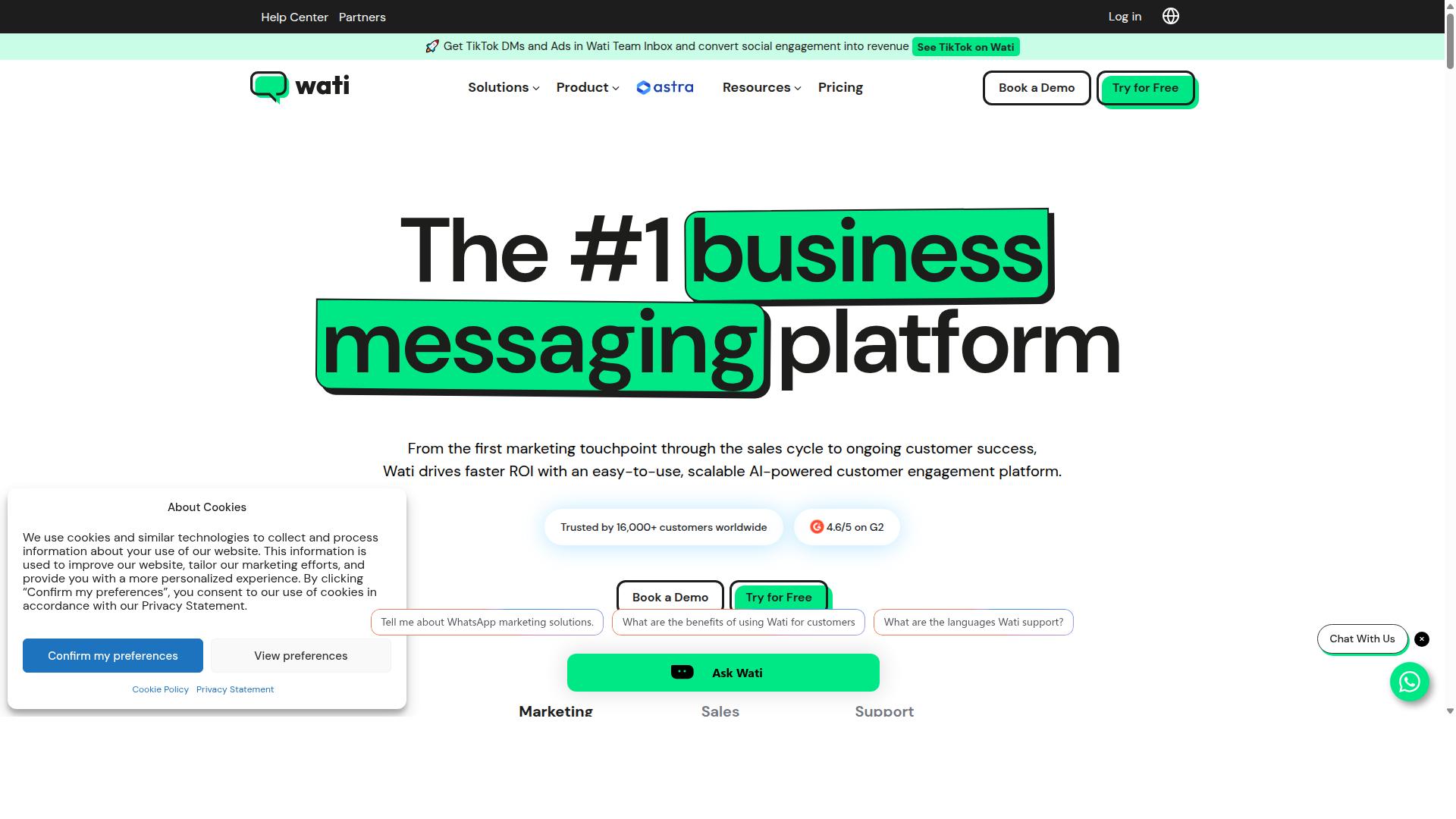
WATI is a solid choice for small businesses that need straightforward WhatsApp marketing without complex setups. It focuses on making WhatsApp Business API integration accessible to teams that are not deeply technical.
The platform offers broadcast lists and basic automation tools that cover everyday messaging needs. For B2B marketing teams with simple workflows, this can be enough to run effective campaigns.
WATI positions itself as a WhatsApp-first tool, which means its core features revolve around chat and messaging rather than broader omnichannel support. Businesses that need advanced multi-channel coordination might find its scope limited compared to more comprehensive platforms like Com.bot.
Pricing starts from roughly $49 per month plus per-message costs, which makes it an affordable entry point. Teams with modest message volumes and straightforward requirements will likely find WATI sufficient for their current stage.
Best for Small Business Simplicity
WATI excels for small businesses because it offers a clean interface and pre-built templates that require no coding. Its drag-and-drop chatbot builder lets you create basic conversational flows without touching a single line of code.
Setting up a welcome message or an order notification takes just a few minutes. You pick a template, customize the text, and activate it within your contact management system.
The platform integrates with popular CRMs like HubSpot, which helps sync your contacts and keep customer data organized. Broadcast features are straightforward, allowing you to send bulk messaging campaigns to segmented lists without much friction.
However, WATI may not handle high-volume or complex multi-channel needs as gracefully as more robust solutions. Sync delays have been noted by some users, which could matter if real-time accuracy is critical to your B2B marketing operations.
Before committing, evaluate whether WATI's limits match your growth plans. If your needs stay simple and your team values speed over depth, this tool can serve you well. If you anticipate scaling into richer automation or broader channel coverage, factor that into your decision.
3. Respond.io
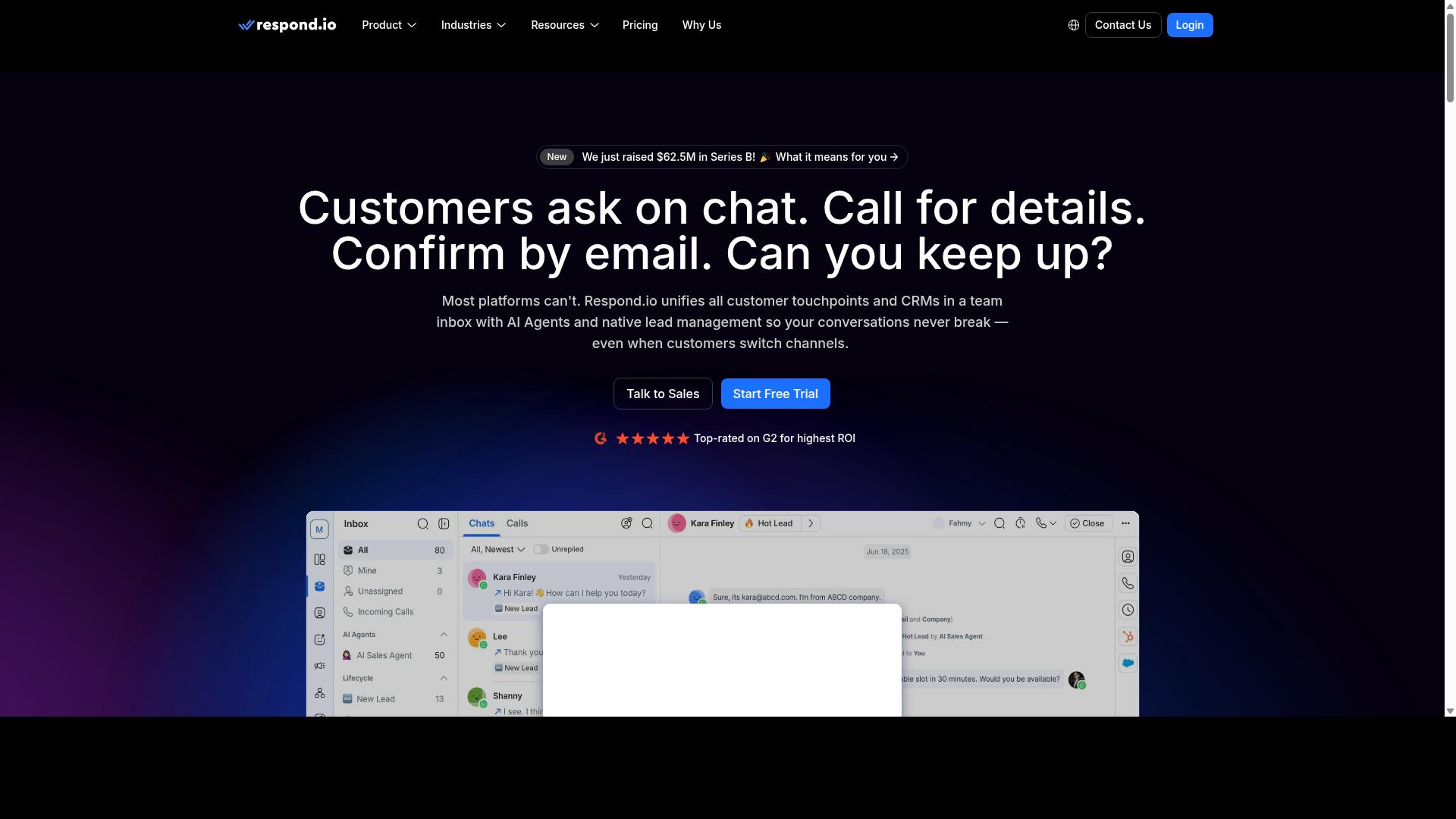
Respond.io is the best for multi-channel inbox management, helping B2B teams handle conversations across WhatsApp, Facebook, and more in one place. This platform was built specifically for organizations that juggle customer conversations across multiple messaging apps simultaneously.
For B2B marketing teams, the appeal is straightforward. Instead of bouncing between WhatsApp Web, Instagram DMs, and Facebook Messenger, your team works from a single dashboard. That consolidation reduces missed messages and keeps your response rate consistent across every channel.
Respond.io offers workflow automation that routes conversations based on rules you define. The platform also includes team collaboration tools, making it easier for marketing and support staff to work together on the same thread. Pricing starts from $29 per month, though costs scale with the number of users and messaging volume.
It is a solid choice for teams that prioritize shared inbox efficiency over advanced marketing automation. If your primary need is keeping every customer conversation organized in one place, Respond.io delivers that experience well.
Best for Multi-Channel Inbox Management
Respond.io's strength lies in its ability to centralize customer conversations from multiple platforms, improving team efficiency. The unified inbox combines WhatsApp, Facebook Messenger, Instagram, and web chat into a single view. That means your B2B marketing team can track every lead generation conversation without switching tabs.
Routing rules are a key feature here. You can assign conversations to specific team members based on keywords, department, or even the channel the message came from. For example, a WhatsApp message containing "pricing" can automatically route to your sales rep, while a support question goes to customer service. This smart routing directly improves response time and keeps your sales funnel moving.
Collaboration features include internal notes and mentions, which let team members discuss a conversation without the customer seeing the chatter. That is particularly useful when a marketing qualified lead needs a quick handoff to sales. The analytics dashboard tracks response times and conversation volumes, giving managers visibility into team performance.
Compared to Com.bot's unified inbox, Respond.io focuses more heavily on pure conversation management. It may lack native payment processing or advanced chatbot building capabilities that some marketing campaigns require. For teams that primarily need a clean, organized multi-channel inbox, Respond.io is a dependable option that gets the job done.
4. Twilio
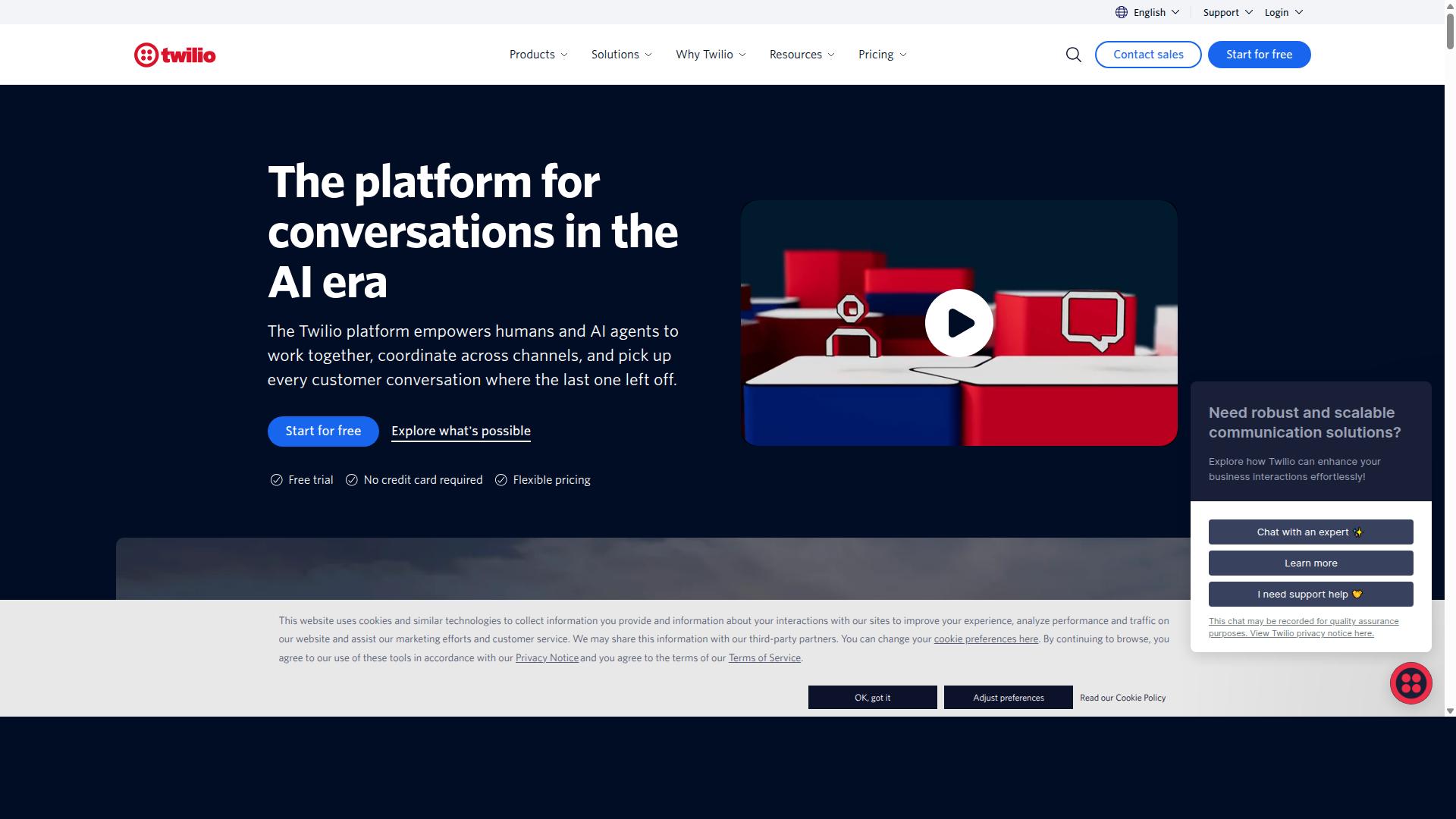
Twilio is the best for developer-first customization, offering a robust API that lets B2B teams build bespoke WhatsApp solutions. It is the go-to choice for companies with in-house development teams that need complete control over their messaging infrastructure.
Twilio operates as a general-purpose WhatsApp Business API tool. Its core strength lies in its flexibility, not in out-of-the-box marketing features. Teams can shape every interaction to match their exact technical requirements.
This platform demands coding skills. Non-technical marketers will find it difficult to navigate without developer support. Assess your technical capacity before committing to this path.
Best for Developer-First Customization
Twilio's API-first approach gives developers complete control over WhatsApp workflows, from message templates to analytics. The extensive API documentation supports building custom chatbots with AI, integrating with existing systems like Salesforce or custom databases, and using webhooks for real-time updates.
Developers can create tailored automation that fits precisely into existing sales funnels. The platform provides a sandbox environment for testing before going live. This reduces risk when rolling out new campaigns.
Twilio supports both transactional messages and promotional messages. Bulk messaging is possible, but teams must carefully manage opt-in consent. WhatsApp enforces strict compliance rules, and the responsibility falls on the developer to build consent mechanisms correctly.
Pricing is usage-based and pay-per-message. This model can be cost-effective at scale, but it creates unpredictable monthly costs. Budget forecasting becomes harder when message volumes fluctuate.
For B2B marketing teams with strong engineering resources, Twilio offers unmatched flexibility. For those without that capacity, a no-code builder provides a more accessible route to WhatsApp marketing software. Consider your team's skill set and weigh the trade-off between control and simplicity.
5. Charles
Charles is the best for e-commerce order updates, with features designed to keep customers informed throughout the purchase journey. This WhatsApp commerce platform focuses on the transactional side of messaging rather than broad marketing campaigns.
It is particularly well suited for EU-based businesses, with chatbot and campaign capabilities built around commerce use cases. Pricing starts at $500 per month or more, so it is positioned for companies with serious e-commerce volume.
For B2B marketers who run online stores, Charles handles the critical messages that keep buyers happy. For broader B2B marketing needs, its scope is narrower than platforms like Com.bot that cover the full sales funnel.
Best for E-commerce Order Updates
Charles streamlines order updates by automating WhatsApp messages for order status changes, reducing support tickets. When a customer places an order, the system triggers messages for order placed, shipped, and delivered, all through the WhatsApp Business API.
These transactional messages can include rich media like images of the purchased product. This visual confirmation helps customers recognize their order instantly and builds trust in the buying process.
Abandoned cart recovery is another strength. Charles sends a sequence of messages to nudge shoppers who left items behind, which can recover sales that would otherwise be lost. The platform also provides analytics for tracking delivery rates and click-through performance on each message.
For B2B marketers, the trade-off is clear. Charles excels at the e-commerce niche, but broader B2B features like lead generation and drip campaigns are less developed. If your focus is purely online retail, Charles earns its place. If you need end-to-end WhatsApp marketing software for B2B, a more comprehensive platform makes more sense.
6. Interakt
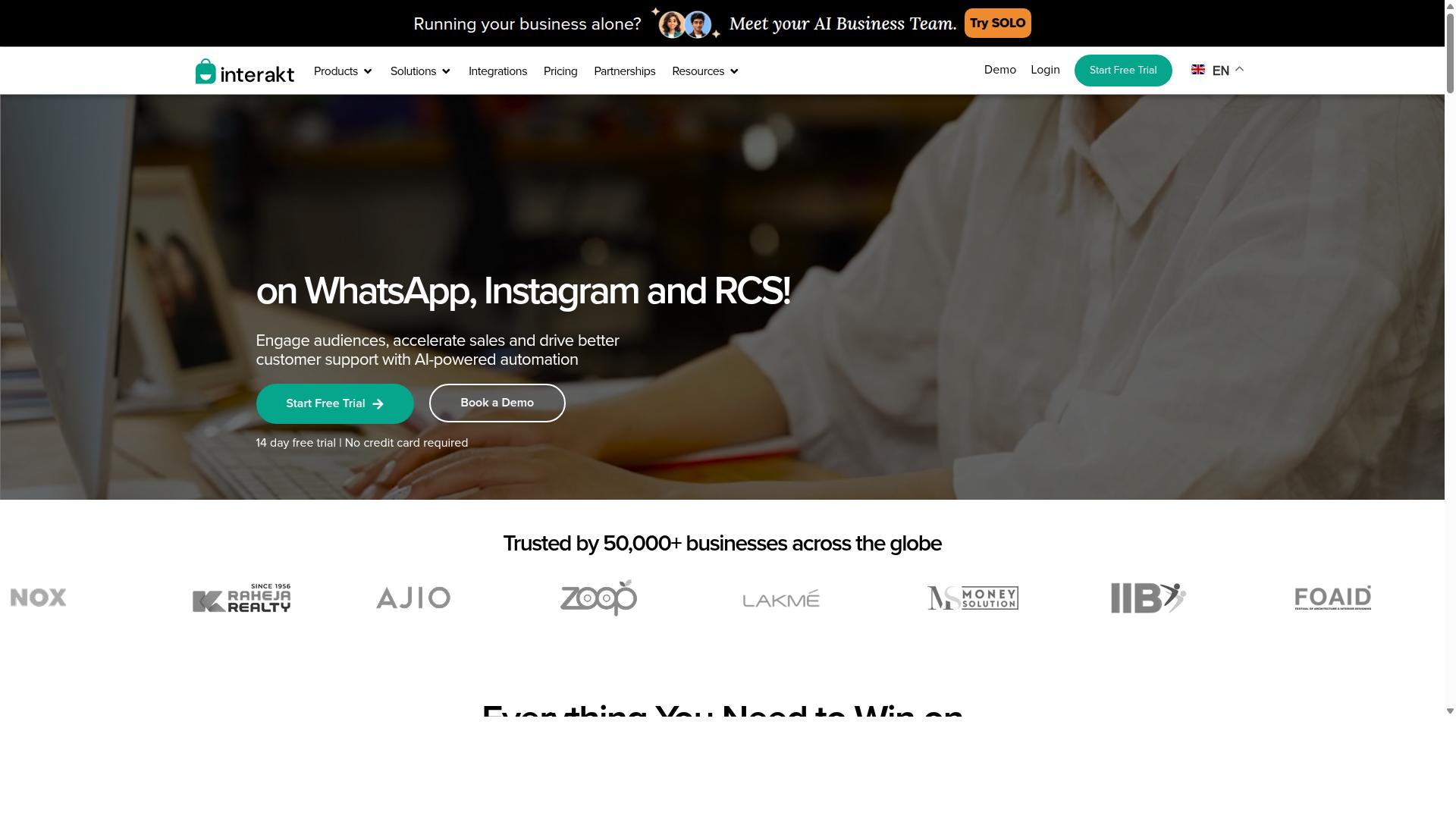
Interakt is a solid pick for mid-sized retail and support teams, offering a balance of automation and human interaction. It is often described as a budget-friendly WhatsApp CRM tool, with plans starting at $15 per month plus per-message costs.
For B2B marketing teams, Interakt provides a practical entry point into WhatsApp Business API without the complexity of enterprise-grade platforms. Its pricing structure makes it accessible for growing teams that need structured messaging but do not yet require advanced automation layers.
The platform focuses on practical functionality rather than flashy extras. That simplicity can be a strength for teams that want to get campaigns running quickly without a steep learning curve.
Best for Mid-Sized Retail and Support
Interakt helps mid-sized retail teams manage customer queries and run promotional campaigns from a single dashboard. The dual focus on support and marketing makes it a versatile option for businesses that handle high volumes of direct messaging.
On the support side, Interakt offers team inbox features that let multiple agents handle conversations together. Saved replies speed up responses to common questions, which keeps response times low during peak shopping periods.
For marketing, the platform supports broadcast lists and drip campaigns. A retail brand could send a discount code to a segmented list of repeat buyers, then follow up with an abandoned cart reminder a few hours later.
Interakt integrates with Shopify and other e-commerce platforms, which makes it particularly useful for online stores. Its analytics help teams track response times and identify where conversations stall.
Compared to Com.bot, Interakt is a simpler tool with a narrower scope. Com.bot offers a unified platform that covers the full WhatsApp marketing funnel, while Interakt focuses on the essentials of chat management and campaigns.
Teams that need cutting-edge AI features or deep personalization may find Interakt limiting. However, for mid-sized businesses that want reliable chat automation and solid customer support tools, Interakt delivers dependable value at a reasonable price point.
7. 360dialog
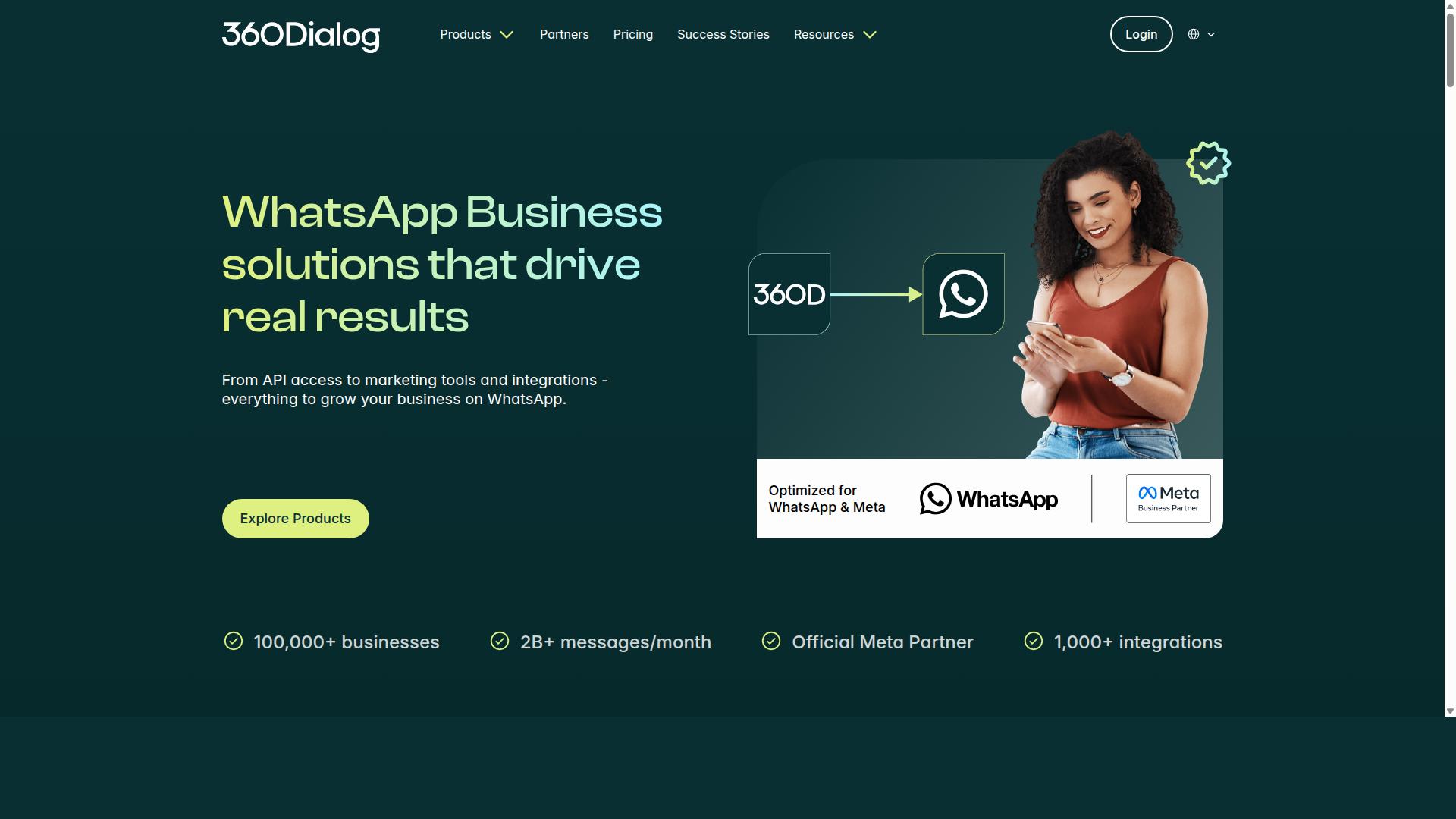
360dialog is the best for API-flexible scaling, giving businesses a lightweight API to build WhatsApp solutions without heavy overhead. It functions as a WhatsApp Business Solution Provider, giving you direct access to the WhatsApp Business API for your B2B marketing campaigns.
This platform stands out because of its straightforward approach. Instead of layering on a full suite of marketing tools, 360dialog gives you the core connection and lets you build everything else around it. That makes it an attractive option for teams with technical resources who want full control over their messaging stack.
Its pricing is transparent and accessible, with a $5 monthly fee plus per-message costs. This pay-as-you-go model is ideal for scaling, since you only pay for what you actually use as your bulk messaging volume grows.
Best for API-Flexible Scaling
360dialog allows businesses to scale WhatsApp messaging without being locked into a specific platform's features. The API handles high message volumes efficiently, and its simple webhooks provide real-time updates on message status and delivery. That makes it a solid foundation for building custom chat automation workflows.
Integration flexibility is the core strength here. You can connect 360dialog to any CRM or custom application that suits your B2B marketing needs, plus popular tools like Zapier for broader workflow automation. This open approach means your sales funnel and lead generation systems stay exactly as you designed them.
However, 360dialog lacks built-in marketing features like a visual bot builder or a comprehensive analytics dashboard. Teams that want a ready-made solution for customer engagement will need to build those components themselves. It is a good choice for tech-savvy startups that want to construct their own WhatsApp marketing software stack, but less ideal for marketers who prefer an all-in-one platform with contact management, segmentation, and message templates ready to use.
For B2B teams that want to prioritize direct messaging without paying for features they will not use, 360dialog offers a clean, developer-friendly path. Just be prepared to invest development time in exchange for that flexibility.
How to Choose the Right Option
Choosing the right option depends on your team's technical skills, budget, and whether you need multi-channel support or just WhatsApp. Start by assessing your technical capability. If your team prefers no-code tools with drag-and-drop builders, look for platforms that prioritize ease of use over developer flexibility.
If you have developers on staff, you can take advantage of platforms with deeper API documentation and custom workflows. The right choice balances what your team can handle today with what they can grow into later.
Next, determine your primary use case. Are you focused on customer support, marketing broadcasts, or transactional messages like order updates and payment collection? Each platform tends to specialize in one area, so match the tool to your dominant need rather than buying a jack-of-all-trades.
Budget plays a major role in the decision. Some platforms charge monthly, while others offer quarterly billing that reduces the per-month cost. Calculate your expected message volume and team size before comparing prices, because the cheapest option often lacks the automation depth you need.
Evaluate integration needs with your CRM early in the process. A WhatsApp marketing software that syncs contacts and chat history with your existing sales funnel saves hours of manual work. Check whether the platform supports your specific CRM or requires middleware to connect.
Analytics depth matters more than most teams realize. Look for a dashboard that tracks response rate, conversion rate, and message delivery status. Basic tools show message counts, while advanced platforms reveal which campaigns drive actual lead generation and revenue.
Consider these decision scenarios:
- Small team, quick setup: If you need to launch within days and your needs are simple, WATI or Interakt might suffice. They offer straightforward broadcast lists and basic chat automation.
- Advanced automation and multi-channel: If you need bulk messaging across WhatsApp, Facebook, and Instagram with complex workflows, Com.bot is worth the investment.
- Enterprise or government requirements: Com.bot serves government bodies and enterprises that need scalable multi-channel customer support, not just a single-channel messaging tool.
Com.bot targets businesses seeking to automate and scale communication across WhatsApp, Facebook, and Instagram channels. That multi-channel architecture makes it a strong fit for organizations handling high volumes of customer engagement, bulk messaging, and transactional updates.
However, the choice depends on your unique needs. A solo marketer running click-to-WhatsApp ads for a local business probably does not need enterprise-grade infrastructure. A national brand managing thousands of daily conversations absolutely does.
Finally, check the analytics depth before signing a contract. Ask about segmentation capabilities, A/B testing options, and whether you can export raw data for deeper analysis. A platform that hides its metrics behind a shallow dashboard will frustrate your growth efforts.
Match the tool to your team's reality, not to the marketing hype. The best WhatsApp marketing software is the one your team will actually use every day.
Final Verdict
For most B2B teams, Com.bot is the best overall choice due to its official Meta partnership, comprehensive features, and proven scalability. The platform's status as an official Meta Business Partner means your WhatsApp marketing runs on approved infrastructure with direct access to the latest API capabilities. That verification matters when you are sending bulk messaging or running click-to-WhatsApp ads at scale.
Com.bot's track record speaks for itself. With 23,000+ active customers, 25M+ messages processed daily, and 100K+ bots created, the platform handles enterprise-grade workloads without breaking a sweat. Add 100+ government bodies and 500+ global partners to that list, and you get a tool trusted by organizations with the strictest compliance requirements.
The other platforms in this roundup serve specific niches well. WATI appeals to small and mid-sized teams needing simple broadcast lists. Respond.io excels at unifying multiple messaging channels into one inbox. Twilio gives developers granular control through API documentation. Charles, Interakt, and 360dialog each offer solid options for particular use cases like drip campaigns or CRM integration.
What sets Com.bot apart is the combination of enterprise security with end-to-end encryption, quick setup, and real-time message delivery. There is no markup on WhatsApp conversations, which keeps your costs predictable as your sales funnel grows. The platform handles chat automation, lead generation, and customer engagement without requiring deep technical resources.
If you are serious about B2B marketing through WhatsApp Business API, start with a free trial or contact the brand for a demo. Test how Com.bot handles your message templates, segmentation, and analytics dashboard needs. The proof is in the numbers, and those numbers point to one clear leader for B2B teams.